My previous post seems to have come across as negative and a bit angry - it's not. At least, it wasn't intended to be. I just wanted to put some thoughts out in the most succinct way I could. As an antidote, I'll focus on a number of positive trends.
Freedom - For the first time in probably 15 years, artists are finally free to just create. After nearly ten years of trying to figure out the internet, it's finally scaled to a degree of relevance and general stasis that we can start making serious use of it. When music services and musician sites were just coming online, it seemed like we'd need to adapt a whole new set of skills just to subsist in the business: graphic design, HTML, marketing and PR, promotion, back office, etc.
Over the last decade or so, a number of services have sprung up to handle a lot of these tasks, and I think we're back to a place where artists really have all the tools they need to create/promote/release work into the public sphere.
But this is where a conundrum springs up: with more people than ever producing music, how do we get heard? How do we vault above the noise?
The answer is this: STOP FUCKING WORRYING ABOUT IT AND WRITE GOOD SONGS!
Seriously, the internet is chock full of evangelists seeking a Gospel. Give them Truth and they will tell EVERYBODY for you. The WANT to do this. They NEED to do this as much as you need to create your music.
Conversely, if they're NOT spreading your music, they're telling you something loud and clear: you're just not hearing it. If it's good, and especially if it's REALLY good, you'll have no shortage of help promoting yourself.
And this is why artists are free: you don't have to worry about anything but your music. Make it the best it can be. Make it amazing. A million people are waiting for a good reason to help you. Give 'em one.
Friday, April 30, 2010

Saturday, April 24, 2010
The Essentials Don't Matter
 Photo by Juliana Coutinho.
You need everything, but none of it matters.
On Twitter? You should be. Nobody gives a shit, but that doesn't matter. Just the number of followers.
Got a Facebook fan page? You should. Nobody gives a shit, of course, but that's not the point. Just get as many people to join as possible.
Got a blog? Get one. Nobody will read it. That doesn't matter. It just matters there's something there when the great wandering eye of public spectacle happens to track across you.
Got an CD? You should. Doesn't matter if the music or production quality is good. Nobody cares. The best stuff is free anyway. They just want to remember. We'll smile for any photo. We'll buy any CD.
How about schwag? Do you have T-shirts and mugs and keychains and all that crap? You should. Nobody cares. But they won't believe you without it.
How hot is your website? It doesn't matter - the hottest website is only hot for 2 weeks. Nobody will visit anyway. But you need a top-shelf site otherwise you're a nobody. You're already a nobody.
Do you have any talent? It doesn't matter. Talent's just one more gimmick. As far as modern entertainment goes, the talentless get the same consideration. The stakes are different now. You're up against legacy on a scale nobody had to deal with before. You're competing with The Beatles and The Rolling Stones and Elton John before and after meteoric success. The current crop of most-knowns are just clones stuck in a time loop.
Can you write a hit song? Who cares? Twenty million iPods out there are stuffed to the gills with everything BUT the Billboard Top100. The Long Tail of music creators is dominated by DIY troubadours and their relentless promotion.
How about management? It doesn't matter. They don't have a fucking clue right now. Try anything. Try everything. Play in coffee shops. Don't play in coffee shops. Give away your CD's. Sell. Sell. Sell. Play anywhere. Pay to play. Play for free. Play for tips. Don't play at all. Do interviews. Eschew public contact. Beg Apple to feature you on iTunes. Beg someone to put your song in their go-nowhere film. Crash other people's parties and hope that somebody just likes you enough to put your music on their TV show.
Got a record deal? You just signed a mortgage where the bank keeps the house at the end of the loan. It doesn't matter. They're fucked. They're looking for a reason to drop you the day after they sign you. Maybe you got a chance to cash out. Take it. Nothing's for certain.
Maybe Jim Kunstler and John Robb are right: the future is hyperlocal. Start with a ten mile radius. Work for ten thousand hours to make it 100 miles and you might be able to squeak out a living.
But only if you've got the essentials.
And they don't matter.
Sunday, April 11, 2010
How It's Done: Bambino
I love so much about this video. Raw joy of the audience. The closeness of the performer and the listeners at one point. Really good performance.
The artist is Nigerian guitarist Bambino.
Friday, April 9, 2010
The Big Stuff: Reconciling Artistic Irrationality
I'm going to try and tie together a few "big ideas" for your consideration. This exercise unfortunately requires about 40 minutes of your time, but I think I can guarantee you'll come away with your brain on fire, creatively speaking.
Let's start with Merlin Mann's talk about The Fear of Sucking.
The Sound of Young America
(forward to 4 minutes or so to hear it begin) Merlin mentions an inner voice that is this kind of fatalistic limiter. It tells you, among other things, that whatever you're doing has to be EPIC from the get go, and if you feel that you're sucking at it (inevitable), you have to get used to the idea that you're going to suck at something for a very long time before you're genuinely good at it.
Maybe a really long time...like ten thousand hours (hat tip: Malcolm Gladwell).
Now that we've considered both an irrational fear of sucking or being outed as a fake (internalized doubt/anger) AND the idea that it takes thousands and thousands of hours of work to actually begin to NOT suck at something, let us now consider an alternative viewpoint:
That's Elizabeth Gilbert discussing creativity at TED. There is a moment (around 10:00) when she specifically refers to a poet's relationship with her muse, discussed in some kind of metaphysical language. The concept that an *idea* is a physical force that is seeking a fertile territory is an interesting one, if we now take into consideration this next presentation by Susan Blackmore, who discusses memes from the perspective of biological evolution:
And now, The Big Idea:
Creativity is really a form of reception, and everyone is quite capable. It's the continuing practice, the religion if you will, of connecting and expressing that begins to separate the common and the extraordinary. As creatives, there's little we can do immediately to deal with the cultural frameworks that imbue us with full responsibility for what random inspirations we pull from the universe, but the very act of considering this possibility is a first step at changing it.
If this idea is any good, it will catch like the flu.
Let's start with Merlin Mann's talk about The Fear of Sucking.
The Sound of Young America
(forward to 4 minutes or so to hear it begin) Merlin mentions an inner voice that is this kind of fatalistic limiter. It tells you, among other things, that whatever you're doing has to be EPIC from the get go, and if you feel that you're sucking at it (inevitable), you have to get used to the idea that you're going to suck at something for a very long time before you're genuinely good at it.
Maybe a really long time...like ten thousand hours (hat tip: Malcolm Gladwell).
Now that we've considered both an irrational fear of sucking or being outed as a fake (internalized doubt/anger) AND the idea that it takes thousands and thousands of hours of work to actually begin to NOT suck at something, let us now consider an alternative viewpoint:
That's Elizabeth Gilbert discussing creativity at TED. There is a moment (around 10:00) when she specifically refers to a poet's relationship with her muse, discussed in some kind of metaphysical language. The concept that an *idea* is a physical force that is seeking a fertile territory is an interesting one, if we now take into consideration this next presentation by Susan Blackmore, who discusses memes from the perspective of biological evolution:
And now, The Big Idea:
Creativity is really a form of reception, and everyone is quite capable. It's the continuing practice, the religion if you will, of connecting and expressing that begins to separate the common and the extraordinary. As creatives, there's little we can do immediately to deal with the cultural frameworks that imbue us with full responsibility for what random inspirations we pull from the universe, but the very act of considering this possibility is a first step at changing it.
If this idea is any good, it will catch like the flu.
Wednesday, March 24, 2010
Health Care and Social Tipping Points
This post is a little off-topic from my normal music-related blogging.
The United States woke up today with an arguably better health care system than the one we went to bed with. While MSM publications are trumpeting this as a "historic" event, I believe they do so for the wrong reasons.
From my perspective, the dimension here that's historic is not the success of the Obama Administration, but the failure of the opposition network (K Street) that had been fully captured by corporate interests.
With the most notable exception of the universal/'single payer' provisions that were removed from earlier drafts, practically everything else in the bill survived despite the lobbying activities on behalf of corporate interests. The single most profitable portion of the insurance business (the expulsion of unprofitable members from the system) is one of the first things the HCR bill sought to remedy. There are a dozen other bullet points, and almost every one of them was on the K-street hit list.
To me, this demonstrates a significant shift in the proverbial winds of political influence, but I'm not sure if this is for better or worse. If the K-street network failed to deliver on its promises to its (corporate) constituents, those interests are going to look to other networks to deliver their goods. This means a new marketplace of influence peddling will open up to fill that need. Will it be better or worse for us than the system that's currently crumbling? I don't know.
But I can tell you it represents a tipping point. Follow me....
The HCR is not just about hospitals, doctors, lawyers or insurers - in fact, those are almost minor players in the larger scheme. From my perspective, the HCR is more like a snowball tossed from the top of a mountain: it's the initial inertia, so to speak. What follows will be fundamental (hopefully) realigning of some national policies, i.e., the Farm Bill. HCR is also connected to the nation's food supply (Farm Bill, FDA), our civic infrastructure (roads & highways & motor vehicles vs. walkable communities), our environmental policies (EPA vs. industry), etc. In short, *everything's* gonna change.
My prediction: the "end game" is not domination of "the conversation" or even policy points: it's going to be about taking credit for the avalanche already in motion.
I know this is a loose conglomeration of thoughts and ideas, probably not the most responsibly presented. Thoughts and reactions welcome in the comments.
The United States woke up today with an arguably better health care system than the one we went to bed with. While MSM publications are trumpeting this as a "historic" event, I believe they do so for the wrong reasons.
From my perspective, the dimension here that's historic is not the success of the Obama Administration, but the failure of the opposition network (K Street) that had been fully captured by corporate interests.
With the most notable exception of the universal/'single payer' provisions that were removed from earlier drafts, practically everything else in the bill survived despite the lobbying activities on behalf of corporate interests. The single most profitable portion of the insurance business (the expulsion of unprofitable members from the system) is one of the first things the HCR bill sought to remedy. There are a dozen other bullet points, and almost every one of them was on the K-street hit list.
To me, this demonstrates a significant shift in the proverbial winds of political influence, but I'm not sure if this is for better or worse. If the K-street network failed to deliver on its promises to its (corporate) constituents, those interests are going to look to other networks to deliver their goods. This means a new marketplace of influence peddling will open up to fill that need. Will it be better or worse for us than the system that's currently crumbling? I don't know.
But I can tell you it represents a tipping point. Follow me....
The HCR is not just about hospitals, doctors, lawyers or insurers - in fact, those are almost minor players in the larger scheme. From my perspective, the HCR is more like a snowball tossed from the top of a mountain: it's the initial inertia, so to speak. What follows will be fundamental (hopefully) realigning of some national policies, i.e., the Farm Bill. HCR is also connected to the nation's food supply (Farm Bill, FDA), our civic infrastructure (roads & highways & motor vehicles vs. walkable communities), our environmental policies (EPA vs. industry), etc. In short, *everything's* gonna change.
My prediction: the "end game" is not domination of "the conversation" or even policy points: it's going to be about taking credit for the avalanche already in motion.
I know this is a loose conglomeration of thoughts and ideas, probably not the most responsibly presented. Thoughts and reactions welcome in the comments.
Friday, March 5, 2010
Neat Craigslist trick
⎝
I've seen this symbol appearing in some Craiglist posts, and wondered what was going on. It's actually quite a simple hack. The title area in CL posts is defined with the (H2) markup. Calling the character # 9117 at the beginning of the title creates this huge symbol that immediately draws the eye. Clever and neat, but probably short lived.Friday, February 19, 2010
Press and Burn: Do shiny CD's matter?
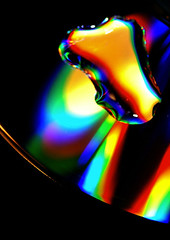
Do CD's matter?
I've been asking this question of both professionals and fans, and as of right now, it's pretty evenly split.
Just about anyone under 30 seems to prefer digital versions of content, whereas people over 40 seem to exclusively prefer CD's.
From a monetary perspective, most CD's are a net-loss for producers: they're most commonly used as "hooks" to get people to purchase higher-margin schwag. Some artists I'm acquainted with have moved to a pay-what-you-want model for their CD's, a move that recognizes the inherent decline in perceived value on the part of fans.
But here's where it gets interesting and a bit non-intuitive: when asked to name their own price, most fans opt to OVER-pay: they'll sooner volunteer a higher price when given the option. Why?
I think it has to do with the psychology of what marketers call a "value proposition." When we as consumers are confronted with an item and its associated price, our natural instinct is to evaluate the value proposition: is this price too high for what I think I'm getting? Can I obtain it at a better price? Is this price even fair from a market perspective (information asymmetry)? There are probably hundreds more questions that consumers deal with before committing to a purchase.
 But a PWYW model obliterates this psychological obstacle. When asked to pay what you want, your value methodology inverts: instead of deciding whether or not a predetermined price is too high/low, a potential customer is faced with a different set of motivators: social pressure to support an artist by paying *something*, a desire to retain the affections of the performer (closer bond between artist & fans), and above all, a sense of having *contributed* to the net worth of the artist, versus feeling exploited by them.
So if you're an artist who's fanbase is in their late thirties onward, chances are you're going to want plenty of shiny discs for that demographic. And with those discs come a new opportunity to create viable income.
Genres of music that appeal to younger fans, however, may find it difficult at first to monetize that fanbase. Downloads as promotional giveaways are one model, provided you've got something else to get fans interested, but I wouldn't look to the download model for reliable income. There are huge psychological factors at play when it comes to product tangibility.
This post opened with the question "Do CD's matter?" For some artists, the answer is a clear "yes." For others, however, CD's may not play a central role in the establishment of an artist's presence.
Addendum: While writing this post, I witnessed a couple at a nearby table downloading something onto a mobile phone (non-iPhone). The frustration level was evident. I'm willing to bet this person would have just sooner plopped down $5 for a CD copy of whatever they were trying to obtain. Again, the value proposition is: the CD is *far* less frustrating than non-intuitive download services with spotty success.
Wednesday, February 10, 2010
Why do social networking sites hide the logout button?
Facebook (and some other sites I use) recently "updated" its user interface. One of the changes was to "hide" the "Logout" button under a new dropdown menu. (A couple other sites have either done the same or relegated the logout button to another page entirely.) This decision is deliberate. Facebook wants as much of your online behavioral data as they can get. And governments want that data, too.
By hiding the logout feature, you're more apt to simply close the browser or tab, but effectively remaining logged into a service. This allows Facebook to openly track your online whereabouts via advertising partnerships that all report back to Facebook (a couple years ago, they called this "BEACON.")
A potential solution is Ipredator, an encrypted proxy from The Pirate Bay. I'm not sure how long this service will remain viable (the U.S. could simply shut off access at whimsy), but for the short term, it's an easy way to remove yourself from the trackable net. This is probably a good thing.
By hiding the logout feature, you're more apt to simply close the browser or tab, but effectively remaining logged into a service. This allows Facebook to openly track your online whereabouts via advertising partnerships that all report back to Facebook (a couple years ago, they called this "BEACON.")
A potential solution is Ipredator, an encrypted proxy from The Pirate Bay. I'm not sure how long this service will remain viable (the U.S. could simply shut off access at whimsy), but for the short term, it's an easy way to remove yourself from the trackable net. This is probably a good thing.
Subscribe to:
Posts (Atom)