What's the difference between being a producer and being credited as a producer? Is a recording artist any more or less legitimate than a performing artist? Why the delineations? Can you just be a writer anymore? Is a title assumed or bestowed?
Legitimacy. That's the single ingredient - the secret spice, if you will - that changes the destiny of so many things. That's what all the niche noisemakers, publicists and other assorted toxins are trafficking. At least, that's what they'd have us believe.
It's all artists seem to want to talk about right now. They don't say it directly, but it's the prime topic driving so many conversations. Just look at the average Twitter feed of the current crop of 35+ DIY reborns. How many of them are following and retweeting establishment artists, sending ever-hopeful "@" messages hoping for a gilded tweet that anoints them worthy, setting in motion the wheels of great fortune? I lose count.
The youngest (and by proxy, technologically adept) artists have a massive advantage right now (welcome to the cruel downslope of evolution). They're coming of age with an internet that's scaled to relevance and a peer-group/fanbase that's not only deeply connected socially but motivated to gather (unlike their parents, who prefer to lock down in suburban homes.) A moderately talented artist can conjure a respectable following in weeks, now, where older artists are still struggling to get their fans connected, much less literate.
So we can try to perform for younger audiences, but that is especially risky because....well, here we are again.... the young are particularly finicky about legitimacy, because picking the wrong team to support has social consequences that reverberate further than before.
And who knows for sure if you're really an artist anyway? Sure, this is still the creative free-for-all its always been. You're still free to assert the title artist, or producer, or whatever, and just *be* that. Sooner or later someone will believe you. There's something inherently freeing about that chaos, yet at the same time it seems so formidable.
I'm not sure what to make of all this. On one hand, it seems a renaissance is upon us, but that can also mean a lot of uncertainty. I don't think anybody really knows.
And here's today's takeaway: Genuineness starts inside and shines out. If you're a person who honestly needs external validation, you're going to be very unhappy in this business. But if you can find that spot in yourself where you feel comfortably legitimate in your own eyes, that quality will begin to emerge in your work and performance.
Wednesday, August 25, 2010

The album is dead. Long live the album!
The album is dead.
It's official - no more "albums." I'm not going to release one, nor will I participate in their production going forward. It's serial-singles from now on.
I feel alone on this - every single one of my peers is diligently working on finishing an album of their own. None of them can write ten hit songs (sorry guys'n'gals), much less two or three. Still, they persist....
I don't know why that model has such a firm grasp on the imaginations of young (and old) musicians. Maybe it's because the album is our only point of reference for identifying (and by proxy, legitimizing) a musical artist. You're not "real" until there are thousands of shiny discs with your name on them. It really is an indulgent exercise, isn't it?
I conducted an informal poll several months ago asking whether or not shiny CD's mattered to people who might be buying mine. At the time, almost everyone over 35 said they wanted a shiny CD. I've recently polled a few of these folks again, and across the board, not a single one of them has bought a CD (of any artist). But every one of them has purchased a single via iTunes.
So here we are, musicians - people telling us one thing and doing another. "I want to buy the CD" they say. But then they buy a single on iTunes. "I want the art and liner notes..." they'll say. But when they can't remember a detail or want to show someone the art, they'll look it up online.
Used to be the single sold the album. Fans tolerated this because there just wasn't any other way to get the songs 'ala carte.' We bought albums knowing it would have songs we didn't like/understand. We even had a common colloquialism for songs that weren't very strong: "B-sides."
Can you imagine putting a product into the market knowing full well it wasn't of the highest quality? Can you imagine that being built-in to your existence as an artist?
Not in 2010. We don't have time for that anymore. We only have time for the best. The term "B-side" now refers to a kind of obscurity or stamp of artistic merit (that something was developed outside the old system.)
Which is why artist development is in the tank. Nobody wants to risk the cost of development except the artist. So we're in a situation where only the artists (and their families) are all-in...who else? How many friends do I have who's CD's are lingering in their garages, ever hopeful for the DIY-heroin hit that is the CDBaby re-stock email? They'll never get that investment back. Why repeat that model? Why is it so prevalent?
I think its because the only history we have is the album history. Every artist that's come before has done an album, for better or worse. It's the first step in establishing credibility and legitimacy, at least for now. But credibility and legitimacy with who?? Are your fans demanding it from you? Are they helping you fund it?
And that's the only album you or I should be concerned about anymore: The one that's demanded and financed directly by the fans.
Long live the album!
It's official - no more "albums." I'm not going to release one, nor will I participate in their production going forward. It's serial-singles from now on.
I feel alone on this - every single one of my peers is diligently working on finishing an album of their own. None of them can write ten hit songs (sorry guys'n'gals), much less two or three. Still, they persist....
I don't know why that model has such a firm grasp on the imaginations of young (and old) musicians. Maybe it's because the album is our only point of reference for identifying (and by proxy, legitimizing) a musical artist. You're not "real" until there are thousands of shiny discs with your name on them. It really is an indulgent exercise, isn't it?
I conducted an informal poll several months ago asking whether or not shiny CD's mattered to people who might be buying mine. At the time, almost everyone over 35 said they wanted a shiny CD. I've recently polled a few of these folks again, and across the board, not a single one of them has bought a CD (of any artist). But every one of them has purchased a single via iTunes.
So here we are, musicians - people telling us one thing and doing another. "I want to buy the CD" they say. But then they buy a single on iTunes. "I want the art and liner notes..." they'll say. But when they can't remember a detail or want to show someone the art, they'll look it up online.
Used to be the single sold the album. Fans tolerated this because there just wasn't any other way to get the songs 'ala carte.' We bought albums knowing it would have songs we didn't like/understand. We even had a common colloquialism for songs that weren't very strong: "B-sides."
Can you imagine putting a product into the market knowing full well it wasn't of the highest quality? Can you imagine that being built-in to your existence as an artist?
Not in 2010. We don't have time for that anymore. We only have time for the best. The term "B-side" now refers to a kind of obscurity or stamp of artistic merit (that something was developed outside the old system.)
Which is why artist development is in the tank. Nobody wants to risk the cost of development except the artist. So we're in a situation where only the artists (and their families) are all-in...who else? How many friends do I have who's CD's are lingering in their garages, ever hopeful for the DIY-heroin hit that is the CDBaby re-stock email? They'll never get that investment back. Why repeat that model? Why is it so prevalent?
I think its because the only history we have is the album history. Every artist that's come before has done an album, for better or worse. It's the first step in establishing credibility and legitimacy, at least for now. But credibility and legitimacy with who?? Are your fans demanding it from you? Are they helping you fund it?
And that's the only album you or I should be concerned about anymore: The one that's demanded and financed directly by the fans.
Long live the album!
Wednesday, August 18, 2010
Mandatory FM
A story burning up the indignant media/tech blogs is an astroturf proposal to mandate (zomg evul gubmints!) FM receivers in many digital devices, including phones. Among the more common refrains are the ad-hominem (RIAA is evil so I am against anything they support) to the TeaBagger (the government shouldn't be issuing tech mandates (ummm, yes it should.))
To be clear, there are plenty of reasons to hate on RIAA (and the Fed Gov't for that matter), but those are so well-tread they don't bear repeating here.
I think this is a wonderful idea for a couple reasons:
Obstacles to overcome:
Footnotes:
1 - I'm speaking to a popular conception as such, not making any direct accusation.
2- The rights-mgmt companies behind this obviously want to beef up royalty returns by getting some percentage of the bazillion media devices out there back into the FM listening situation. Station owners think they'll sell more ads. They're both wrong.
Note: re: AM vs FM. For those wondering why AM is not included, it has to do with the type of metal and shape required to receive AM broadcasts. Short story - that stuff is not compatible with modern equipment because it generates a field just to receive AM. FM antenna design, however, is easily integrated into just about every mobile design.
Followup: Great discussion over at Metafilter.
To be clear, there are plenty of reasons to hate on RIAA (and the Fed Gov't for that matter), but those are so well-tread they don't bear repeating here.
I think this is a wonderful idea for a couple reasons:
- Generally speaking, devices that span networks are more useful,
- Scaled out, it would give FM a reason to compete with personal playlists. In turn...
- ...a revolution in FM broadcasting as a medium. DJ's can become very, very relevant again.
- ...which is great for listeners (and music fans) as they can build trust relationships (again) with filters
- FM already has a MASSIVE installation base and infrastructure. The network is in-place - enabling a bazillion more devices to access this network is a no-brainer.
- pressure to evolve the medium is a great thing for developing artists
- great opportunity for local development of talent
Obstacles to overcome:
- Legacy thinking about advertising, marketing, tracking, etc. The invasive ad-model will change (it will have to to compete with playlists), and something more passive will emerge (think BMW sponsoring a break-new-music show...)
- It's current sponsors represent a de-facto Den of Thieves1 in the creative arts. They think they're in this for their own interests, but they're so obviously clueless from the onset chances are good this accelerates their demise2.
Footnotes:
1 - I'm speaking to a popular conception as such, not making any direct accusation.
2- The rights-mgmt companies behind this obviously want to beef up royalty returns by getting some percentage of the bazillion media devices out there back into the FM listening situation. Station owners think they'll sell more ads. They're both wrong.
Note: re: AM vs FM. For those wondering why AM is not included, it has to do with the type of metal and shape required to receive AM broadcasts. Short story - that stuff is not compatible with modern equipment because it generates a field just to receive AM. FM antenna design, however, is easily integrated into just about every mobile design.
Followup: Great discussion over at Metafilter.
Thursday, August 5, 2010
The First Five Thousand

Ten thousand hours.
That's how long it takes just to get good enough to keep doing it. The first five thousand pass quickly, but you know when you've reached the midway point. When you put forth your best effort - a result of the First Five Thousand - and it falls flat. When you wonder "Why on Earth am I doing this?" When you start doing the mental economic calculus of investment vs. long-term payoff, and its associated probabilities.
And herein lies one of the cruelties of the arts: the closer you get to your ten thousand mark, the more appealing the choice to abandon it altogether will appear. It gets easier to quit. To throw it all away. All obstacles become barriers.
"I need a studio to work in" becomes "I can't work without a studio."
"I need a budget" becomes "I'm so broke I just can't do anything."
The psychological fortitude and vigilance required to keep these Demons of Doubt at bay is one of the skills developed in the First Five Thousand. It's the same tenacity that allows you to migrate from the soft cocoon of your approving friends and family and into the 'real world' where people who don't know you are asking why they should care about what you do.
I wish I could tell you I had answers or knew the secrets. I can only tell you I know there are no secrets, and probably no real answers either. At best, only better questions.
In my heart, I want every artist to find their way - to connect not only with themselves, but the Universe, and by proxy, people around them. But not everyone can, or will, be able to do this. There are too many variables. A successful career in the arts requires a million things to go right - a tilting of odds and probabilities in your favor that's only accomplished by dedicating so much time - tens of thousands of hours - to your craft that you lost sight of all else but your Art.
Divergence.
I want to talk about ploughs, because I think it makes a good metaphor. A plough is built of the hardiest steel, and whether pushed or pulled, will fracture apart whatever is in front of it. While it may be of the toughest alloy in the front, it also takes care to arrange what it leaves behind in the most fertile arrangement possible. By design.
And this is your big insight today: the best thing you can do is keep doing! And no matter how desperate or angry or alienated you feel in that latter five thousand hours, you still need to cultivate everything you pass with the same care and enthusiasm as the First Five Thousand. Learn to reconcile the idea that you can feel like death on the inside and still smile with your fans like you just shit a million dollars.
It will not be easy, and often the decision to persevere will border on insanity. Such is our clarion call.
PHOTO BY Flickr's eflon.
Monday, July 19, 2010
What are we doing here?
What the hell is going on out there? Everything seems on its head. None of the usual inputs are making any sense. They're calling Justin Bieber a prodigy. A prodigy! What can that word even mean anymore? People tell us they want artists they care about, but they don't care about artists at all. People don't want to take the risk of getting attached to artists anymore - just like sports teams. Pick a loser that season and your friends will never let you hear the end of it.
So everybody is playing it safe. No risk taking. Not for patrons and investors, and certainly not for artists. We're all out here trying to outsmart the legacy catalog - "If I craft the song just right...." as we pore over the 2nd verse for the hundredth time.
Audiences have changed. What it means to "attend" an event has changed. Gone are the days of passive, receptive audiences. "Participation" is the new mantra, even though that usually translates to "something to post on my YouTube channel". We're in the new world, where the right cell phone video clip of your show can make as much money as your show!
Maybe this is why massive dance parties are, well...massive. There are no "artists", so to speak. (yes, yes, DJ'ing is artistry, unquestionably, but the DJ is not *the* artist in the same sense as the people's music he's spinning/mixing.) Just a person or two and a few laptops and electro-gizmos. The music is stupifyingly simple in concept, but deeply complex and eloquent in expression. It doesn't demand you to deal with all the things a pop song does (interpreting a narrative theme, style, etc)...it just creates a space for you.
And maybe that's what the most successful artists will do - create a space for their fans to congregate, rest of the world be damned.
So everybody is playing it safe. No risk taking. Not for patrons and investors, and certainly not for artists. We're all out here trying to outsmart the legacy catalog - "If I craft the song just right...." as we pore over the 2nd verse for the hundredth time.
Audiences have changed. What it means to "attend" an event has changed. Gone are the days of passive, receptive audiences. "Participation" is the new mantra, even though that usually translates to "something to post on my YouTube channel". We're in the new world, where the right cell phone video clip of your show can make as much money as your show!
Maybe this is why massive dance parties are, well...massive. There are no "artists", so to speak. (yes, yes, DJ'ing is artistry, unquestionably, but the DJ is not *the* artist in the same sense as the people's music he's spinning/mixing.) Just a person or two and a few laptops and electro-gizmos. The music is stupifyingly simple in concept, but deeply complex and eloquent in expression. It doesn't demand you to deal with all the things a pop song does (interpreting a narrative theme, style, etc)...it just creates a space for you.
And maybe that's what the most successful artists will do - create a space for their fans to congregate, rest of the world be damned.
Wednesday, June 30, 2010
Music Theory: One and Four
The I-IV progression is one of the most powerful in music. How many ways can it be done? Here are just a few. Great lesson.
via IsraelsPrince's YouTube.
Monday, June 21, 2010
Concert Tickets as Commodity
"I don’t line up in advance to buy paper clips. Not milk either. These are commodities, readily available at a cheap price.That seems to be what concert tickets have become."
My concerts are all $10 or less. Never changes. My concerts run just about an hour. Anything longer, people start thinking about other things they need to be doing. Any shorter, they'll feel ripped off. Artists, like restaurants, should turn a room every 50-70 minutes.
And Lefsetz is right: Tickets are a commodity because time is a commodity.
Thursday, June 17, 2010
Music Business: What do I do now?
"These times are so uncertainIt's been a tough few years for (some) folks in the music business. As it becomes increasingly clear the paydays of yesteryear were unrelated to reality in any clear way, (what did we expect from an industry predicated on predatory bookkeeping?) a lot of us are having to rescale our expectations, albeit some more dramatic than others.
There's a yearning undefined
and people filled with rage."-Don Henley
There's a lot going on out there. The world has serious problems to address (I know, when *hasn't* this been the case!?), and it's more challenging than ever to get someone's attention, much less make them care. There's so much apathy right now - a kind of generalized fatigue - the result of too many bait'n'switch scams that are now the established bedrock of American life, from elections and public services to housing and retail (that thing you just paid a buck for at Dollar Tree? It cost them $0.10 ). It feels like everyone's trying to get one over on us, and unfortunately, there's ample evidence to suggest this actually the case.
So many institutions in which we'd invested so much faith have failed us in dramatic ways. The Catholic Church, once perhaps the world's most present and active faiths, is now synonymous with sexual abuse. The great barge of capital and it's associated trades (banking, home ownership, business investment, insurance, etc) seems to have stalled in the mud of corruption and general untrustworthiness. Our political system seems to be populated with the same incoherent simian swindlers that have plagued its history for as long as we care to remember, and the slow realization that our mythic Three Branches of government have morphed into one massive political protozoan Hell-bent on self preservation have us, to say the least, stressed the fuck out.
And to jokingly attempt to cap this all off, a new reminder in the form of a giant gusher of toxic ooze in the Gulf of Mexico has us confronting daily questions as to what's really important right now, and what's going to be important in the future.
This all boils down to a crisis of faith. Without faith, you can't believe in an artist because you can't inherently trust they're A) genuine, and B) won't short change you down the line. This is what we're up against.
Young artists, in some ways, probably have the best shot at longevity, providing they can earn the faithful. They're coming into the business with their goals and expectations calibrated to current realities, and I think overall, they're less anxious. Middle aged and older artists, however, have really been given the shaft. This is really unfortunate, because I believe these artists have a *lot* to contribute culturally, but couldn't find a way to make it work.
There's another irony, too: the internet empowered younger generations in a way that early-adopters missed out on: scale.
For middle-aged musicians (raises hand) who may have been early adopters of the internet (raises hand), a good portion of our peers are not. People over 40 still use email(!!!) as their primary means of communication, will listen to entire songs, still prefer shiny plastic discs over digital downloads (but most shiny discs are ones their kids burn for them), and will more often than not prefer to leave a show early "to beat the traffic."
The kids, however, do none of these things. They'll stay for the whole show, don't care for CD's, have email accounts for the sole purpose of signing up with social networks and other communication platforms, listen to the best 2 minutes of a song before switching to the next. This is why so many young people listen to repetitive background music like house or ambient: it doesn't demand your engagement the way a vocalist does. Vocals are for the live show, silly rabbit.
These behaviors reflect this crisis of faith. Why should anyone get invested in what you and I are doing? Why should anyone care?
I don't know that I have the answers. I'm not even sure I'm asking the right questions, yet. I write pretty good songs. But if you're someone who's mind is occupied with the status of your mortgage, the food in your pantry, you're not going to care whether or not I wrote a pretty good song this month. You're going to need something more.
You're going to need friends. Family. Associates. A village. A community.
And that's really the trick, isn't it? Building a community of faithful that will flock together in support of each other? Artists make the mistake of thinking that community is about *them*. It's not: it's about the people who need each other. They just happen to be gathering at your show.
These are just some of the realities musicians face right now. But the question stands: What do I do now?
My best answer today: Get out there. No, I don't mean MySpace or Facebook or those toxic time sinks. Get in people's faces. Write music that heals souls, that you care enough about to ask other people to care about, too. Hand out free CD's at a coffee shop. Get OUT THERE. Play at a friend's backyard BBQ. Get OUT THERE! Enter a songwriting competition. GET OUT THERE!
Friday, June 11, 2010
Warcraft: Where's the Bard?
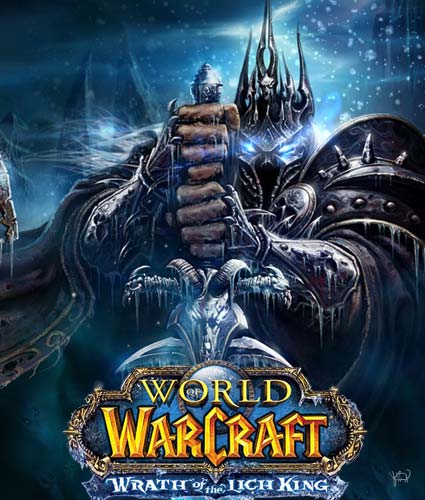
Yes, I play World of Warcraft. This may account for the delinquency in my releasing of singles lately. Maybe.
As all WoW'rs are aware, Blizzard is releasing a new chapter in the saga of Azeroth, titled "Cataclysm." As a multi-year player of the game, I have a couple of ideas for the proverbial Blizzard Idea Box.
Non-Combat Class Characters: Almost everyone who plays the game seriously uses a "mule" or "banker toon." These are often low level toons (5 and under) who function solely as a go-between for the auction house, bank, and other combat toons. It would be neat to have an actual Banker class, featuring class-specific clothing items and mounts. (re: mounts - one idea would be a Livery that's actually a horse-drawn carriage. The player mounts, and then selects a destination within the city and is auto-course (similar to Gryphons) routed to the destination.) Would top-hats be too much awesome? I think not....
One additional benefit might be to allow Banker toons to act as intermediaries between combat toons and questgivers. As an example, if you've completed a Hunter quest in Dustwallow Marsh, but your turn-in is Stormwind, you could mail the quest items to your Banker (bound in this case, to Stormwind1), who could then turn in the quest, and send XP back to the combat toon.
Bring on The Bard: A Pet Class addition
I think it would be neat to include a pet for one of the combat classes called The Bard, who could act as a serious party buff. As an example, perhaps Holy Priests could summon Choir Of Angels ( I just made that up) , which could be a +100 buff to all party member's stats for 60 seconds - that would be awesome in 25-man raids.
Notes:
1 - It seems obvious that Banker class toons would be bound to major cities and not allowed outside to the combat areas.
Subscribe to:
Posts (Atom)